
Keno at Online Casinos in the UK: Rules and Odds
 Available in GB
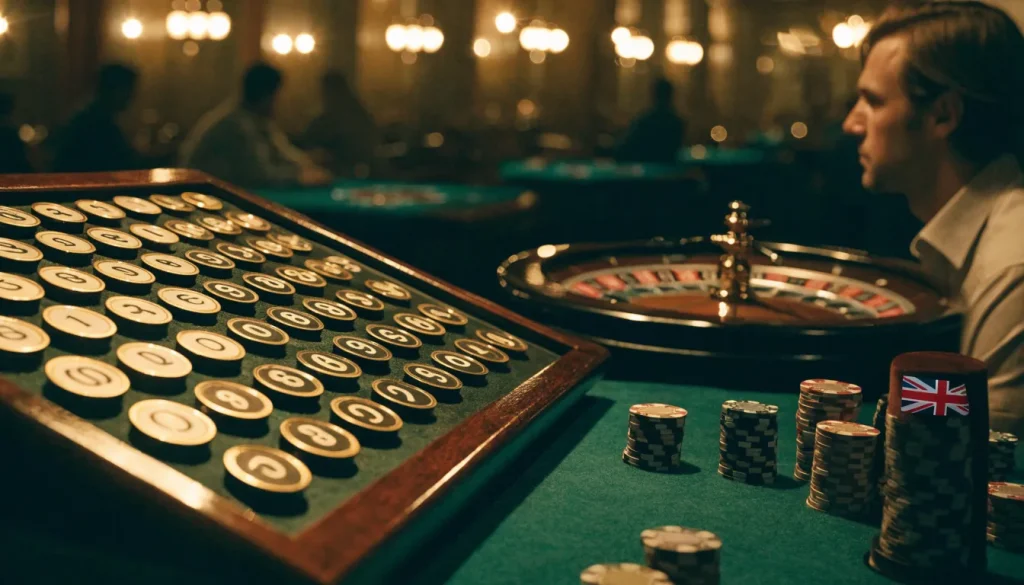
Keno rules, payouts and house edges vary by game, so the game name alone cannot show how favourable its terms are.
Keno at Online Casinos: What the Evidence Can Establish
Keno is offered as a casino game online, but the label alone says little about the financial terms attached to a particular version. Offers can differ in their rules and payouts, and the house edge is not fixed across casinos. A comparison of keno casinos in the UK therefore cannot be based on the game name alone: the relevant terms belong to the specific game being considered.
The house edge represents the casino’s mathematical advantage over time, rather than a prediction of what will happen in an individual round. It is an important measure because a larger edge means a less favourable theoretical return to players over repeated play. A specialist review reports a range of 5% to 40% for keno, with the figure depending on the casino. That range should be treated as a reported span, not as a guarantee that every available game falls within it or as a current measurement of every UK offer. It does, however, show why the presence of keno at an online casino is not enough to establish that its terms are comparable with those elsewhere.
Choosing an online casino for keno means looking beyond the game itself to practical details such as how quickly you can receive a payout. Use this list as a starting point when considering keno options in the UK.
1. BeOnBet
Payout speed: 1-3 business days
BeOnBet lists a payout speed of 1–3 business days, giving you a clear timeframe to consider when assessing its suitability for keno.
2. Chanze
Payout speed: 1-3 business days
Chanze lists a payout speed of 1–3 business days. This is the available practical detail to factor into your keno shortlist.
3. SpinFormula
Payout speed: 1-3 business days
SpinFormula lists a payout speed of 1–3 business days, a useful point to keep in mind when considering it for keno.
4. Jetsetspins
Payout speed: 1-3 business days
Jetsetspins lists a payout speed of 1–3 business days. That stated timeframe is the key available detail for prospective keno players.
5. NightLuck
Payout speed: 1-3 business days
NightLuck lists a payout speed of 1–3 business days, which provides a clear practical detail for your keno research.
6. Dieselwin
Payout speed: 1-3 business days
Dieselwin lists a payout speed of 1–3 business days. Consider this stated timeframe as part of your keno selection.
7. Britsino
Payout speed: 1-3 business days
Britsino lists a payout speed of 1–3 business days, giving prospective keno players a specific payout detail to consider.
8. SlotoSport
Payout speed: 1-3 business days
SlotoSport lists a payout speed of 1–3 business days. This is the available concrete detail to weigh when considering it for keno.
9. NightWin
Payout speed: 1-3 business days
NightWin lists a payout speed of 1–3 business days, a practical point to note when researching keno options.
10. WinBeast
Payout speed: 1-3 business days
WinBeast lists a payout speed of 1–3 business days. Its stated payout timeframe is the available detail to consider for keno.
The range also makes a clear risk point: some keno games may have a house edge of 25% or more. That is a substantial theoretical disadvantage, and it should not be obscured by the simple appearance of a game or by an attractive presentation. The range does not establish that every keno game has an edge at that level; its lower end is below 25%. The distinction matters. A warning about the possibility of a high edge is justified, while treating the highest reported figure as a universal property of keno would overstate the evidence.
A sound comparison consequently requires game-specific information. Rules and payouts vary between platforms, so the terms attached to one game cannot safely be assumed to apply to another. The game’s paytable, rules and odds should be checked before wagering. These details provide a more useful basis for judging an offer than the casino’s general description of its keno selection. Where the terms are not clear, there is no reliable basis for inferring the game’s financial profile from its name or from the fact that it is available online.
This limitation also affects claims about which keno casino is “best”. That description is not meaningful without a stated basis for comparison. A site may provide access to keno, but that alone does not establish that its game has a lower house edge, more favourable payouts or terms matching those of another site. Since the edge can vary by casino and the game terms vary by platform, any broad ranking would need to make clear what has been compared and on what evidence. A general label cannot substitute for those details.
Fast payout online casinos UK: keno returns explained · Online Bingo UK: Formats, Tickets and Slot Games
The UK setting supplies a separate condition for real-money casino play. Operators offering remote gambling to Great Britain consumers must hold the relevant Gambling Commission licence, and online gambling is legal for players aged 18 and over where the operator holds that licence. This establishes a regulatory baseline for access; it does not show that the financial terms of every keno game are alike. Licensing and game value are distinct questions, and neither should be treated as an answer to the other.
The phrase “best keno online casino” is therefore best understood as a request to compare specific, available games and their stated conditions, not as a quality that can be inferred from a casino’s name or from a general claim about keno. The reported house-edge range is wide enough to make that distinction material. In particular, a keno game with an edge at or above 25% presents a substantial theoretical disadvantage, even though the range reported by a specialist review also includes lower figures.
For UK players assessing online keno, the decisive evidence is the information attached to the individual game: its rules, paytable and odds. Those terms must be checked before wagering, because neither the game category nor the casino’s broad presentation establishes what a particular game returns. This is a narrower conclusion than declaring one operator universally superior, but it follows from the variation in house edge and the fact that payouts and rules differ across platforms.
House Edge Risk
Some keno games may have a house edge of 25% or more, representing a substantial theoretical disadvantage for the player.
How Keno Cards, Picks and Draws Work
A keno round begins with a card showing numbers from 1 to 80. Before the draw, a player chooses a set of numbers, known as spots. The number of spots available is set by the particular game: some allow selections of up to 10, 15 or 20 numbers. The card’s range stays distinct from the number of spots chosen; selecting a spot does not mean that it will be drawn.
Once selections are made, the game produces a draw. In online keno, a random number generator determines which numbers are drawn. A standard round draws 20 numbers, while some versions draw fewer. The drawn set is compared with the player’s chosen spots. A spot is caught when its number appears in the draw.
The sequence is therefore straightforward: the card presents the available numbers, the player makes selections, and the game generates a draw. The result is determined by the comparison between those selections and the numbers drawn. A digital display may show the draw as numbers appearing one after another, but the sequence on screen does not change the basic process: the outcome comes from the random draw.
The range of available picks matters to how a particular round is configured. A game with a smaller selection allowance does not offer the same choice as one permitting more spots. Likewise, a game that draws fewer numbers differs mechanically from one that draws the full set of 20. These rules are specific to the game being played, so the label “keno” alone does not establish how many spots may be selected or how many numbers will be drawn.
Bonus Buy Slots UK: Features and How They Work
The draw mechanics are separate from the way a game calculates winnings. The number of spots selected and the number caught both affect the result under the game’s rules, but the relationship between a match and a return is defined by that game’s paytable. Accordingly, two online keno games can share the same basic card-and-draw structure while applying different rules to the result. The distinction is relevant whether keno is played on a computer or a mobile device: the screen changes, but the essential round still involves spots chosen before a random draw.
Keno’s financial risk should not be inferred from the simplicity of its mechanics. A specialist review reports that the house edge can range from 5% to 40%, depending on the casino; this range means the edge can be 25% or more in some games. That is not a fixed property of every keno game, but it is a material possibility when considering a particular offer. The draw itself explains how a result is produced, not how favourable its terms are.
For any given round, the game’s displayed rules determine the permitted selections and draw format. The same numbered card can therefore be used across games with different configurations, without making those games mechanically identical. A clear understanding of the card, chosen spots and draw is the starting point for interpreting a result; the terms governing what that result pays are a separate matter.
Keno Payouts, Odds and Paytables
A match is not automatically a profitable result. The amount returned depends on how many spots were selected, how many are caught and the rules of the particular game. A paytable sets out the payment for each outcome, so the same number of catches can produce different returns in different keno games. A winning outcome may also return less than the original stake; the paytable is needed to distinguish a payout from a net gain.
A winning outcome may return less than the original stake; the paytable is necessary to distinguish a payout from a net gain.
The paytable should be read alongside the game rules and odds before any wagering. It should make clear which combinations qualify for a payment and how much each pays. The odds describe the likelihood of those outcomes, while the paytable describes their financial value. Neither measure alone gives a complete picture: a rare result may offer a large prize, but its size does not make it likely, and frequent smaller payments do not by themselves show that a game is favourable.
Return to player (RTP) is another way of expressing the financial structure over a large number of plays. It is related to the house edge: a higher edge means a lower theoretical return to players over time. Neither figure predicts the result of an individual round, and a published RTP should not be treated as a promise that a particular player will receive that proportion of their stake.
A specialist review gives a broad estimate of keno house edges, ranging from 5% to 40% across casinos. That span is evidence of substantial variation, not a dependable figure for every current game. Keno can carry a house edge of 25% or more, so this is a material cost to consider before wagering. A game’s actual paytable and odds matter more than a general estimate, and figures should be checked against the specific game’s stated terms.
Comparisons between online keno games are therefore meaningful only when the underlying rules and payout structure are known. Two games may use similar-looking cards yet pay differently for the same outcome. A headline prize, a high displayed RTP or a description of a game as generous cannot replace the full paytable. Where the odds are not clearly available, the financial terms cannot be assessed with confidence.
Fastest payout online casinos in the UK: what counts · 3-Reel Slots in the UK: Rules, Risks and Odds
The comparison also needs to account for the stake required for each play. A payout schedule may appear attractive while the available bet sizes fall outside a player’s intended spending range. The stake and the possible return should be considered together, rather than judging a game by its largest prize alone. This is a practical part of assessing whether the terms fit a planned bankroll; it does not change the chance of catching a spot.
Payouts and betting structures differ between platforms, and the same game label is not enough to establish that its terms are identical elsewhere. Before wagering, the specific game’s paytable, rules and odds should be checked. If those details are unclear or incomplete, there is no sound basis for estimating what a match is worth or how the game’s returns compare with another option.
Number Selection and the Limits of Keno Strategies
Keno players can mark spots themselves or use an automated random selection. These are different ways to produce a set of picks, not different ways to influence the draw. Manual selection may reflect personal preference, while an automated option chooses spots at random; neither method makes a particular result more likely.
Claims that a system can predict winning spots go beyond what the game’s random mechanism supports. Keno outcomes are random, and no strategy guarantees a win. A sequence of previous results, a preferred pattern or a belief that some spots are “due” does not provide a reliable basis for forecasting the next draw. The same applies to supposed lucky numbers: in legitimate keno games, selecting particular spots does not affect the outcome.
Do
- Use manual selection for personal preference
- Use automated random selection for speed
Don’t
- Rely on systems to predict winning spots
- Believe that previous results influence the next draw
This distinction matters when considering how to play keno online. A selection routine can make choosing spots quicker, and manual entry can give players control over which spots appear on their card. Neither changes the chance of catching a spot. A strategy may describe how someone chooses or reuses numbers, but that description should not be confused with evidence that the method improves results.
Multi-race cards allow the same selection to be carried into consecutive keno games. Their purpose is continuity: the chosen spots remain in use across those games rather than requiring a fresh selection each time. Repeating a selection this way does not increase the chances of winning. It simply applies the same spots to more than one game, with each result still determined by a random draw.
The distinction between repetition and prediction is easy to lose in accounts of “systems” based on past outcomes. Reusing spots can be a preference or a practical feature, but it does not make those spots more likely to be drawn. Likewise, changing selections after a loss, following a perceived pattern or switching to numbers that have not appeared recently cannot control a random result. No selection history turns random outcomes into a dependable forecast.
For those comparing ways to play keno casino games online, the relevant difference is therefore how a selection is made, not whether it has predictive power. Manual choice and automated random selection are both available approaches; neither supplies an advantage established by the game’s rules. Any claim that a particular pattern, sequence or system can ensure a win should be treated with caution, because it conflicts with the random nature of keno.
French Roulette Online Casinos in the UK: Rules · Five-Reel Slots in the UK: Online Play Explained
Keno Variants and Video Keno
Keno is not a single fixed format. A familiar version draws numbers from a pool, but the number of draws can change between games: some variants select fewer than the maximum of twenty. That difference affects the shape of a round, so the rules of one game should not be assumed to apply to another. The label “spot keno” may describe a straightforward format, but it does not establish how many numbers that particular game draws or how its prizes are arranged.
Video keno is another format found in casino games. Its screen-based presentation can resemble a slot machine, which helps explain terms such as “keno slots” or “keno slot machine online”. The comparison should not obscure the underlying distinction: video keno is presented as keno, while the odds reported for it are about as unfavourable as those of slot machines. The resemblance in presentation is not evidence that the games have identical rules, features or payout structures.
A cautious assessment should treat keno as a game with a house edge of at least 25%. A specialist review reports a much wider range, from 5% to 40%, and says the figure can vary by casino. That reported range is not a dependable estimate for every current game, but it reinforces the point that the format name alone does not reveal the financial terms. Differences between variants can matter, yet the relevant terms must be established for the specific game rather than inferred from a general description.
Attention: The slot-like presentation of video keno does not mean it has slot machine rules; its odds are often as unfavourable as those of slot machines.
Some games add optional side bets, including multipliers. A specialist review describes such features, but their presence should not be treated as a standard feature across keno games. A side bet changes the wager structure; it does not make the underlying draw predictable. Nor does a more elaborate interface establish that a game offers better value. Before wagering, the specific game’s rules, paytable and odds should be checked, since payouts differ between platforms and formats.
Other variants may award a prize when none of the selected spots are drawn. This outcome is sometimes called a zero-match result. It is a reversal of the more familiar aim of catching spots, but it remains a defined outcome within that variant’s rules, not a general property of keno. Such rewards may apply only when a player has chosen more than a specified number of spots; the threshold and associated terms depend on the game. The presence of a zero-match prize therefore needs to be confirmed in the game information rather than assumed from the category.
These features can make different games look materially different even when they share the keno name. One may draw fewer numbers, another may include a multiplier side bet, and another may recognise a no-match result. Those distinctions are about format and available outcomes, not evidence of a system for improving results. In each case, the draw remains random; a feature changes what the game pays for, not which numbers will be drawn.
Live Baccarat Online Casino UK: How It Works · Monopoly Live Casino UK: Online Play Explained
The phrase “keno slot games” can also blur the distinction between video presentation and game mechanics. A slot-style screen does not, by itself, show whether the game has a side bet, rewards matching no spots, or draws fewer numbers. Likewise, the phrase “keno slot machine payouts” does not identify a common payout schedule. Those details belong to the individual game, and the paytable is the place to establish them.
For the same reason, a casino’s collection cannot be evaluated from a broad label such as “online keno” alone. The meaningful comparison is between the actual rules and payout information for the available games. Names and visual design may help distinguish formats, but they do not substitute for the stated odds and paytable. No single variant can be treated as representative of all keno, and a feature advertised in one game should not be presumed to appear elsewhere.
Understanding these differences keeps format claims in proportion. Fewer drawn numbers, side bets and zero-match rewards are possible variations, not universal rules. Video keno’s slot-like presentation likewise does not establish favourable odds; the available assessment places its odds in a similarly poor range. The specific game’s rules, paytable and odds remain essential checks before any wager.
Licensed and Live Keno in the UK
Real-money keno offered to customers in Great Britain falls within the UK gambling-licensing framework. Operators selling remote gambling to people in the British market must hold the relevant operating licence from the Gambling Commission, even when based elsewhere. The Gambling Act 2005 governs gambling in England, Wales and Scotland; Northern Ireland has a separate legal framework. A casino’s description of a game as “live” does not change the licensing requirement for an operator serving Great Britain.
UK Regulatory Baseline
Operators serving Great Britain must hold a Gambling Commission licence. This ensures a legal framework for access and responsible gambling tools, but does not guarantee the financial terms of specific keno games.
A licensed setting also carries safeguards that affect access to play. Operators must verify a customer’s age before allowing deposits. New customers must be prompted to set a financial limit before their first deposit, and account-level limit controls must remain accessible. UK-licensed casinos must also provide responsible-gambling tools, including self-exclusion. These obligations apply to the operator and account environment, rather than establishing anything about the quality or availability of a particular keno game.
“Live keno” can refer to a game associated with a physical draw or to a casino product presented as live. The label alone does not establish how a game is conducted, whether a human presenter is involved, or how its results are generated. Online keno uses a random number generator, so a live presentation should not be taken as evidence that outcomes are more predictable or that the underlying rules differ. The game’s own rules and paytable remain material to understanding what is being offered.
Live Casino UK: Rules for Real-Money Play
Historical evidence has limited reach. A specialist review reported that a survey of live keno games in Las Vegas in 2001 found returns between 65% and 80%. Those figures describe the surveyed games at that time and place; they do not establish present-day returns for online products or for casinos operating in the UK. They also provide no basis for treating all live keno games as equivalent. Keno payouts vary across platforms, and the house edge can be 25% or higher. The particular game’s paytable, rules and odds therefore need checking before any wager.
The distinction between a live presentation and a UK-licensed gambling service is important. A stream or live-draw label is not itself evidence that the operator holds a British licence. Conversely, the licensing status of an operator does not establish that it offers live keno. Licensing concerns the legal framework for the service; the game’s format and terms require separate examination. No general claim about live availability or returns follows from the historical Las Vegas survey.
Live Blackjack Online Casino UK: Tables and Play
Bonuses, Payout Conditions and Bitcoin Searches
A bonus label does not establish what a particular keno offer includes. A casino may advertise a promotion in general terms, but its availability, eligibility rules and conditions have to be confirmed in the offer’s own wording. The same applies to a no-deposit promotion: the name alone does not show whether keno play qualifies or what conditions apply to any resulting winnings. No specific bonus or set of terms can be inferred from a general reference to keno.
Payout conditions also depend on the game. Keno rules and payouts vary across platforms, so a paytable from one game cannot be treated as evidence of what another will pay. A specialist review likewise notes differences in betting and payout structures between platforms. Before wagering, the specific game’s rules, paytable and odds should therefore be checked together. A promotional page cannot substitute for those game details, and a bonus should not be assessed separately from the terms governing eligible play and withdrawals.
The distinction matters because a headline offer and a game’s payout structure answer different questions. The offer terms describe the promotion; the paytable sets out how that particular keno game relates results to payouts. Neither one establishes the other. The relevant details are those attached to the selected offer and game, rather than a general claim about casino bonuses or keno payouts.
Check Before Wagering
- Review the specific game’s paytable
- Check the rules and odds
- Confirm bonus eligibility and conditions
- Verify the operator’s payment methods
Bitcoin-related wording requires the same caution. A reference to a bitcoin keno casino, or to casinos described as accepting bitcoin, does not verify that a particular site offers that payment method to UK customers. Nor does it establish how deposits, withdrawals, eligibility or promotional terms would work. Those points require confirmation in the operator’s current payment and bonus information; the label itself is not evidence of availability.
The financial terms of the game remain important regardless of payment method or promotion. Keno can have a house edge of 25% or more, so the game’s stated odds and paytable deserve particular attention before a stake is placed. Since keno payouts and rules differ between platforms, comparisons based only on bonus wording or payment labels can obscure material differences in the game itself. The available details should be read as separate terms: the offer conditions, the payment information and the rules for the specific keno game.
Finding Keno Within an Online Casino
A casino’s general games catalogue and its keno selection are not the same thing. A site may offer online keno without offering a live-keno option, so the presence of one does not establish the availability of the other. The distinction matters when comparing casinos: a general claim that keno is available says little about the format offered.
The practical check is the casino’s own game catalogue and the terms attached to the specific game. A listing can establish whether a keno game is offered, while its description can clarify whether it is presented as live keno or another format. Availability should be checked directly rather than inferred from a casino’s broader game selection. Rules and payout arrangements can differ between games and platforms, so a listing alone is not enough to assess the terms of play.
Low-Volatility Slots in the UK: How They Work
Historical evidence does not establish what UK casinos offer now. A survey of live keno games in Las Vegas in 2001 reported returns between 65% and 80%. That result is tied to a particular place, period and group of games; it is not a current measure of live keno in the UK, nor evidence that any particular online casino currently provides it. It should not be used to predict the return from a game available today.
The same caution applies to terms that combine keno with a payment method. A casino’s use of a label such as “bitcoin” would not, by itself, confirm that keno is available there or establish the payment arrangements. Those details require separate confirmation from the casino’s own information.
For UK players, the relevant legal distinction is whether the operator holds the required UK Gambling Commission licence to serve the market. That status does not prove that a particular keno format is in its catalogue. A casino with keno and a casino with live keno are therefore separate propositions: the game list supports the first only when keno appears there, and the live format needs its own confirmation. No historical survey can substitute for that current, game-specific check.
Real-Money Keno and Managing a Gambling Budget
Real-money keno turns each round into a financial decision as well as a game. The stake is exposed to a house edge, and keno has a house edge of 25% or more. That means the game is structured to return less to players over time than they wager; it does not predict the result of an individual round. A favourable result in one game therefore does not remove the financial risk of continuing to play.
Budgeting Principle
Decide on a total spending limit beforehand and stop playing once it is reached, regardless of losses.
A specialist gambling review reports a minimum stake of £1. That figure should not be treated as a universal minimum for every game or platform: available stake sizes depend on the specific offer. The amount placed on a round also needs to be considered alongside how often play continues. A modest stake can still add up when rounds are repeated, so a spending limit set in advance is more useful than deciding after play has begun.
A budget should represent money that can be spent without affecting essential costs. Once that limit is reached, further deposits or attempts to recover losses can increase the total outlay without changing the odds. Chasing losses is not a reliable way to reverse a deficit: each new round remains uncertain, and previous results do not provide a basis for expecting a different outcome.
Before wagering, the game’s own paytable, rules and odds need to be checked. Keno payouts vary between platforms, so a stake or result cannot be assessed in isolation from the terms that apply to that game. The stated stake range, payout conditions and relevant probabilities are part of the same decision about whether the financial risk is acceptable.
UK rules also restrict how gambling accounts can be funded. Remote gambling operators cannot accept credit-card payments, including credit-card funds routed through a money service business. A wallet cannot be used for gambling where it allows credit-card funds to be spent on gambling. These restrictions apply to real-money play and do not change the underlying risk of a keno wager.
The central budgeting principle is to decide beforehand how much can be spent, keep to that amount, and stop rather than increasing it in response to losses. A game’s minimum stake is not a suitable budget by itself: the relevant limit is the total amount allocated to gambling.
First-Deposit Bonuses at UK Casinos: Terms Explained
Playing Keno for Money or in Free Demos
Keno can be tried in a free demo or social casino using play money, before any real-money wagering begins. These modes allow the game to be explored without staking cash. A demo may be available for an individual game, while a social casino provides free games with virtual funds; the precise format depends on the platform.
Playing for real money is different because each round involves a chosen stake. The stake size can be selected, and some games allow the same selection of spots to be used across multiple games. Reusing a selection is a convenience, not a change to the results: each game still produces its own outcome. The selected stake applies to the real-money play, so the amount committed can increase when the selection is carried into further games.
Before wagering, the specific game’s rules, paytable and odds need to be checked. Keno has a house edge of 25% or more, and payouts vary between platforms; a demo result therefore does not establish what a real-money game will pay. Free play can show how a game operates, but it cannot remove the financial risk attached to wagering.
Best Online Slots: What Payout Percentages Can’t Show
The transition from a demo to real-money play should not be treated as automatic. The two modes may use similar game interfaces, yet only real-money play puts funds at stake. Likewise, having played with a particular selection in a demo does not make that selection more likely to win when used for money. A demonstration is a way to try the format, not evidence of an advantage.
Those deciding how to play keno at a casino can therefore distinguish between learning through play money and wagering on a cash stake. In either mode, the game may allow a chosen set of spots to carry across multiple rounds. In real-money play, however, the stake and the terms attached to that specific game determine the financial exposure. A free session offers no guarantee of the same experience or returns when play switches to cash.
How does Multi Keno work?
Multi-race Keno lets you play consecutive games using the same number selection. It does not increase your chances of winning.
Is the payout guaranteed?
No. Keno outcomes are random, and any winnings depend on how many of your selected numbers match the draw and the game’s paytable.
Are there different versions of Keno?
Yes. Games can differ in how many numbers you may select, how many are drawn, and their rules and payouts. Check the specific game’s rules and paytable before playing.
What is the house edge in Keno?
A reported range is 5% to 40%, depending on the casino and game. Check the specific game’s stated terms, as some games may have an edge of 25% or more.
How do you play Keno?
Choose numbers from the 1–80 card, then the game draws numbers at random. You win according to how many of your selections match the draw and the game’s paytable.
How is Keno betting done?
Choose your numbers and bet size before the draw; you may also be able to use the same selection across multiple games. Minimum stakes are £1.
How do I choose a line and place a bet?
Select your Keno spots manually or use an automated random selection, then choose your bet size before the draw. The number of spots available depends on the game.
Casino Games
Created by the "Aspers Casino" editorial team.