Online Bingo UK: Formats, Tickets and Slot Games
 Available in GB
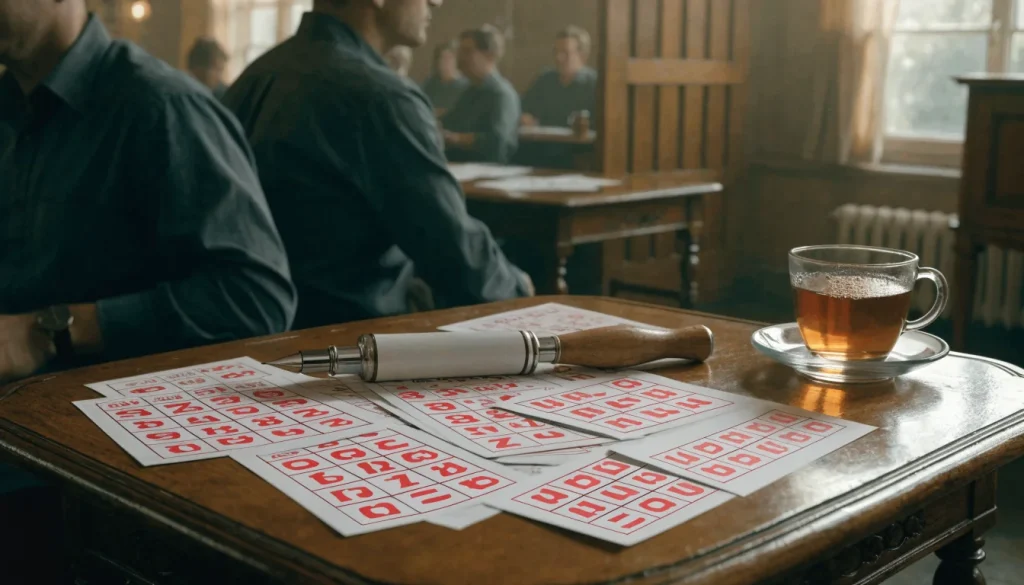
Ticket patterns, prize milestones and room formats distinguish bingo from slot games on sites offering both.
How Online Bingo Formats Work
Online bingo keeps the same basic structure across its main formats: players buy tickets, numbers are drawn, and a win depends on completing a specified pattern before other players. The ticket layout determines which patterns are possible and how progress is recognised. This is the central distinction between bingo itself and other games that may appear on a site offering both bingo and casino games.
90-ball bingo
In 90-ball bingo, each ticket has three rows and nine columns, forming a 9×3 grid. A round can award prizes for completing one line, then two lines, and finally a full house. These are separate milestones on the ticket: the line prizes depend on completing rows, while a full house requires completing the ticket.
The sequence gives the format a clear progression. A player may complete one line without having completed two, and completing two lines is distinct from filling the entire ticket. The winning pattern is therefore defined by the number of completed lines, rather than by a shape traced across selected squares. In an online room, the drawn numbers and ticket markings make that progress visible as the round unfolds.
Choosing an online bingo site in the UK means weighing practical details as well as the games on offer. This list highlights the payout-speed information available for each operator.
1. BeOnBet
Payout speed: 1-3 business days
BeOnBet lists a payout speed of 1–3 business days, a practical detail to consider when choosing an online bingo site.
2. Chanze
Payout speed: 1-3 business days
Chanze lists a payout speed of 1–3 business days. This gives readers a clear timeframe to factor into their choice.
3. SpinFormula
Payout speed: 1-3 business days
SpinFormula lists a payout speed of 1–3 business days, offering a useful detail for readers considering their options.
4. Jetsetspins
Payout speed: 1-3 business days
Jetsetspins lists a payout speed of 1–3 business days, giving readers a stated timeframe for payouts.
5. NightLuck
Payout speed: 1-3 business days
NightLuck lists a payout speed of 1–3 business days. Readers can use this information when weighing their options.
6. Dieselwin
Payout speed: 1-3 business days
Dieselwin lists a payout speed of 1–3 business days, a relevant practical detail for prospective players.
7. Britsino
Payout speed: 1-3 business days
Britsino lists a payout speed of 1–3 business days, giving readers a clear point of reference.
8. SlotoSport
Payout speed: 1-3 business days
SlotoSport lists a payout speed of 1–3 business days, which readers may want to consider when choosing a site.
9. NightWin
Payout speed: 1-3 business days
NightWin lists a payout speed of 1–3 business days, providing a useful detail for readers comparing their options.
10. WinBeast
Payout speed: 1-3 business days
WinBeast lists a payout speed of 1–3 business days, a practical point to keep in mind when selecting an online bingo site.
This is one of the formats commonly associated with online bingo. Its rules can be understood from the ticket itself: numbers appear in a row-and-column layout, and the relevant prize depends on how many lines have been completed. The format does not require a separate shape such as a letter or diamond.
80-ball bingo
80-ball bingo is associated with coloured patterns rather than the line-and-full-house sequence used in 90-ball play. Possible targets include four corners, a letter shape, or a full card. The pattern specified for a round determines which marked positions count towards a win; filling unrelated parts of the ticket does not, by itself, complete that target.
Descriptions of 80-ball tickets include an 8×4 grid, while another stated layout is a 4×4 grid. The precise layout should therefore be read alongside the room’s displayed rules rather than assumed from the format name alone. The pattern remains the key to understanding the round: four corners, for instance, refers to positions on the ticket, whereas a letter shape requires the relevant marked squares to form that shape.
Some descriptions of 80-ball bingo associate a 4×4 grid with quicker rounds than 90-ball bingo. This is a difference in pace, not a change to the basic principle of bingo: numbers are drawn and players track whether their tickets meet the winning condition. The stated pattern, rather than the colour of a square alone, defines what counts as progress.
75-ball bingo
A 75-ball ticket uses a 5×5 grid. Unlike 90-ball bingo, its winning condition is based on completing a designated pattern. Possible patterns include a cross, an X, a diamond, the letter T, or a picture frame. The round’s target determines which positions on the grid need to be marked.
Online American Roulette in the UK: Rules and Play · Monopoly Live Casino UK: Online Play Explained
This makes the announced pattern important from the outset. A ticket may have several numbers marked but still not qualify if those marks do not form the required shape. Conversely, a pattern can be completed without filling every square. The rules of the particular round establish which arrangement is being pursued.
The distinction between a pattern and a full card matters when comparing formats. A full card is a possible target in 80-ball play, but the listed 75-ball examples include shapes that use selected parts of the grid. In 90-ball bingo, the stated milestones are lines and a full house. The word “win” therefore does not describe one identical condition across all forms of online bingo.
Reading a room’s rules
The format name is only part of the rule set. The ticket dimensions indicate how numbers are arranged; the prize pattern states what must be completed. Before a round begins, the room’s description should make clear whether the target is a line, a full house, a coloured pattern, or a particular shape. That information explains what progress on a ticket means and when a completed pattern qualifies.
This distinction also helps make sense of bingo offered within an online casino setting. The bingo room still centres on tickets, drawn numbers and a pattern-based result. The format determines the ticket structure and winning condition; the presence of other products on the same site does not alter those bingo rules. No single layout or pattern should be assumed to apply across every room, particularly where the stated 80-ball ticket dimensions differ.
90-ball bingo
A 9×3 grid where prizes are awarded for completing one line, two lines, and finally a full house.
80-ball bingo
An 8×4 or 4×4 grid focused on coloured patterns such as four corners, letter shapes, or a full card.
75-ball bingo
A 5×5 grid where wins are based on completing designated patterns like a cross, X, diamond, or picture frame.
Across the formats, the useful comparison is not simply the number in the game’s name. It is the relationship between the ticket and the target: lines on a 90-ball ticket, coloured patterns in 80-ball play, or a specified shape on a 75-ball grid. Once that relationship is clear, the mechanics of an online bingo round can be followed without confusing one format’s winning pattern with another’s.
Bingo Rooms and Slot Games: Different Products, Different Returns
A site that offers both bingo and slots brings two distinct forms of gambling together, but that does not make them one game. The bingo room is organised around tickets, number draws and the completion of a winning pattern. Slot games sit alongside that activity as a separate product, with their own play and return characteristics. Keeping the distinction clear matters when assessing what a room offers and what its advertised returns mean.
In bingo, the ticket is the entry to a shared game. Numbers are drawn, and a result depends on whether a ticket completes the required pattern in relation to the other players taking part. The game’s structure is therefore social and event-based: the draw provides the sequence, while tickets determine which patterns can be completed. A slot game does not use that ticket-and-pattern structure. It is a separate game whose result is generated through its own play cycle, rather than by completing a bingo card against a room’s draw.
Online Casino Tournaments UK: Formats and Rules · Casino Dice Games in the UK: Odds and Licensing
The difference also affects how returns should be interpreted. Return to player, or RTP, is a measure associated with a game’s theoretical returns over play; it is not a promise about what an individual session will produce. The comparison is not straightforward when one figure concerns a slot and another refers to a bingo room. Bingo prizes depend on the room’s game and its participants, whereas a slot’s return measure applies to that slot as a separate product. Neither figure predicts the result of a particular play.
Side games often have lower RTP percentages than the bingo room itself. That is a useful point of comparison, but it should not be turned into a universal rule about every game or operator. A broad statement about side games does not establish the RTP of a particular slot, nor does it show what a specific bingo ticket will return. Where a site publishes game information, the stated measure should be read in context and treated as product-specific rather than as a general promise about the site.
This distinction is relevant to the way combined bingo and slot services are presented. A page may place slots near the bingo lobby, or make both types of game accessible through the same account. Their proximity does not alter the rules of either product. A ticket remains part of the bingo room’s draw and pattern process; a slot remains a separate game with its own result mechanism. A slot’s advertised return should not be treated as the return on bingo tickets, and a bingo prize description should not be read as evidence about the slot games.
Return to player (RTP) is a theoretical measure of returns over play and is not a promise of what an individual session will produce.
The same caution applies to the word “room”. It may refer to the bingo environment in which tickets are bought and results are settled, rather than to every game available on the wider site. Side games can be presented within or beside that environment without becoming part of the bingo draw. Product labels and game descriptions therefore matter: they indicate whether an activity is a bingo game or an additional casino game.
For a player considering online bingo and slots together, the relevant comparison is not simply which product appears to offer a larger return. Bingo and slots have different structures, so the measures attached to them do not describe identical events. A room’s prize information concerns its bingo game, while an RTP figure belongs to the slot to which it is assigned. The figures can inform an assessment of each product, but they cannot be combined into a single estimate of what a visit to the site will yield.
Treating the two products separately also avoids a common interpretive error: assuming that an attractive bingo prize makes nearby slots more favourable, or that a slot return says something about the bingo room. Neither follows from the games being offered together. The defining features of bingo remain its ticket, draw and pattern; slots are an adjacent but distinct product. Any comparison of returns is most meaningful when it stays within the product being measured.
Assessing UK Bingo Sites That Also Offer Slots
A site that combines bingo rooms with slot games should be assessed as one gambling operator, not as a bingo service with an unrelated casino section. The products differ, but the regulatory test does not: an operator serving UK players must hold a separate UK Gambling Commission (UKGC) licence. The licence is the starting point for assessment, rather than a badge that by itself establishes that every feature or promotion is suitable.
European Roulette at UK Online Casinos: Rules and Play · Live Baccarat Online Casino UK: How It Works
The UKGC licence number should be displayed prominently in the site footer. It should also be checked against the Commission’s public register before depositing. A mismatch, an absent number or details that cannot be confirmed are reasons not to proceed. This check helps establish whether the operator shown on the site is the one authorised to serve the market; a logo or general statement about regulation is not equivalent to verifying the licence record.
The standards attached to a UKGC licence include fairness, anti-money laundering and responsible gambling. These provide a useful structure for comparing online bingo sites with slots without relying on promotional claims. Fairness concerns the integrity of gambling products and the way their terms are presented. Anti-money laundering requirements concern the operator’s controls around financial activity. Responsible gambling standards concern measures intended to help reduce or manage gambling-related harm. These are regulatory obligations, not optional qualities that distinguish a site as “best”.
A review of fairness should consider whether product information and rules are accessible and intelligible. Bingo and slots are separate products, so their terms should not be treated as interchangeable. The licence does not mean that a bingo room’s rules, a slot’s mechanics and a promotion attached to either are the same. Clear descriptions allow the nature of an offer to be understood; vague or conflicting wording makes comparison less reliable. The assessment should therefore distinguish the games themselves from any promotional conditions attached to them.
Checking UK Bingo Sites
- Confirm the UKGC licence number is displayed in the footer
- Verify the licence number on the UK Gambling Commission public register
- Check for clear information on fairness and financial controls
- Review the accessibility of responsible gambling tools
- Confirm the availability of an internal complaints process and ADR service
Responsible gambling arrangements are another relevant part of site assessment. A licensed operator is expected to meet the UKGC’s standards in this area, but the presence of a licence should not be taken as proof that every account control is easy to find or use. The quality of the information presented matters: policies and controls should be identifiable, and the terms governing them should be clear. This is an assessment of how the operator communicates and implements its obligations, not a prediction of an individual player’s experience.
Anti-money laundering is less visible in the layout of a bingo room, but remains part of the operator’s regulatory responsibilities. A polished design, a broad games menu or a large promotional banner cannot substitute for the underlying compliance framework. Nor does the fact that a site offers familiar bingo and slot products establish its regulatory status. The licence record is the relevant evidence of authorisation; presentation and product range are not.
A sound comparison of UK bingo sites with slots can therefore use a short sequence of checks: confirm the UKGC licence number in the footer, verify it on the public register, and examine whether information about fairness, financial controls and responsible gambling is clear. These checks are more useful than treating “new” or “best” as regulatory categories. A recently launched site is not inherently more or less compliant, and promotional prominence is not evidence of stronger safeguards.
Licensed operators must also provide an internal complaints process and access to an approved Alternative Dispute Resolution service. The availability of those routes is relevant when assessing how a site handles disputes, though it does not resolve the merits of any particular complaint. Together with the licence check and the standards it entails, this offers a basis for evaluating a combined bingo-and-slots service without ranking operators or assuming that one product’s rules apply to the other.
Live Casino Lightning Roulette in the UK: How It Works · Live Blackjack Online Casino UK: Tables and Play
Real-Money Bingo: Ticket Prices and Prize Levels
In a cash bingo room, the ticket price is the direct cost of entering a game. Online prices span a broad range: low-stakes rooms can charge from 1p to 5p per ticket, while premium games may cost £1 or more. Another description of the market places penny-room tickets at 2p and high-stakes games at £5 or more. These ranges indicate that “real-money bingo” does not describe a single entry price; the cost depends on the room and game selected.
The ticket price should be considered separately from the advertised prize. A higher entry cost does not, on its own, establish what a player will win. Prize levels differ between games, and the stated amount is a possible prize rather than a guaranteed return on the ticket cost. The relevant comparison is therefore between the entry price and the prize terms shown for that particular game, not between a low-priced ticket in one room and a headline prize elsewhere.
A specialist review gives a specific illustration of the possible spread: a 1p game might list a £10 full-house prize, while a £1 game could feature a jackpot in the hundreds or thousands of pounds. This is an example reported by that type of source, not a market-wide schedule or a promise that games at those prices carry those prizes. Prize figures can vary by room and over time, so the game’s own displayed information is the appropriate reference for its current terms.
Attention: A larger advertised prize does not indicate better value, nor does it show the cost required to participate or the likelihood of winning.
The distinction matters when comparing bingo rooms that appear similar. Two games may have different ticket prices and prize levels, and a headline jackpot alone does not describe the full value or cost of taking part. A lower-priced ticket means a smaller outlay for that entry; it does not establish that the game offers better value. Conversely, a larger advertised prize does not show how much a player would need to spend to participate or whether the prize is likely to be won.
The total cost also depends on how many tickets are bought. For instance, buying several tickets at the same price multiplies the entry spend, even though the cost of each individual ticket is unchanged. The prize advertised for a game should not be treated as if it applies separately to every ticket. It is the game’s stated prize, while each ticket is an entry under that game’s rules.
For anyone comparing online bingo for cash, the clearest approach is to read the ticket price and prize information together before joining a game. A room’s low entry price may suit a smaller planned spend, while a premium game has a higher cost per ticket and may advertise a larger prize. Neither feature alone establishes which game is preferable: the intended spend and the particular prize terms both matter. The phrase “bingo and slots” can describe a site with both products, but slot games are separate from the cost of a bingo ticket and should not be included when assessing the bingo prize.
There is no single ticket price that defines online bingo in the UK. The available range runs from small-stakes entries to premium games, and the prize attached to an individual game must be read in its own context. This keeps the comparison grounded in the actual entry cost and stated prize, rather than treating a large headline figure as evidence of a routine outcome.
Fastest payout online casinos in the UK: what counts
Free Bingo Tickets, Bonus Terms and Expiry
A free bingo ticket removes the ticket cost for an eligible game, but it does not necessarily make any resulting winnings immediately withdrawable. The ticket and any prize attached to it can be subject to separate conditions. Promotional value therefore depends not only on the number of tickets awarded, but also on where they can be used, when they must be used and what applies to winnings.
A specialist review describes free tickets restricted to particular rooms or ball types, with some expiring after 24 hours. These are reported offer conditions, not a rule applying to every promotion. The room restriction matters because a ticket may not be valid for every game available on the same site. An expiry condition can also make a ticket unusable if the eligible session has passed. The promotion’s own terms determine the applicable room, game and deadline.
The treatment of prizes is another important distinction. Free tickets cannot be withdrawn as tickets or converted directly into cash. Instead, winnings are credited as cash, and those winnings may still be subject to a wagering requirement. In some offers, the requirement is the same as the one attached to a deposit bonus. A cash balance shown in an account may therefore not be fully withdrawable until the stated conditions have been met.
A specialist review reports wagering requirements for free-ticket winnings in a range from 20x to 65x. That range should not be read as a standard applying across operators or offers: the relevant terms can differ. The wording also needs to be checked for what the multiplier applies to. A requirement attached to winnings is not necessarily calculated in the same way as one attached to a bonus, and the promotion terms should specify which funds or winnings must be wagered.
Do
- Check the eligible room and ball type
- Verify the ticket expiry deadline
- Review the wagering requirements for winnings
Don’t
- Assume “free” means unrestricted prize access
- Assume bonus rules apply to all part of an offer
- Assume free tickets can be converted to cash
Deposit-linked bingo bonuses can add another layer of conditions. The ticket offer may be advertised alongside a cash bonus, but the two benefits need not share the same rules. A free ticket might be confined to a particular room while the cash bonus has its own wagering requirement. The terms should be read as separate conditions rather than assuming that accepting one benefit makes every part of the offer available without restriction.
Before valuing a promotion, the essential details are the eligible room and ball type, the ticket’s expiry, how ticket winnings are credited, and whether those winnings carry a wagering requirement. These conditions determine whether a free ticket can be used as intended and when any resulting cash can be withdrawn. The label “free” describes the ticket price, not necessarily unrestricted access to the prize.
Bingo Play in 2026: Session Timing and Ticket Limits
Online bingo sessions are organised around scheduled games, with room activity changing over the course of the day. A specialist review identifies 7pm to 11pm as a peak period for room traffic and reports that operators schedule their largest prize pools during those hours. This is a reported pattern, not a guarantee that every room will be busy or offer its largest pool at the same time. Individual schedules can differ, so the room’s published game timetable is the relevant guide to a particular session.
Mines Casino Game in the UK: What Is Verified · French Roulette Online Casinos in the UK: Rules
The distinction between a busy room and a suitable session matters. Higher traffic can mean more players competing in a game, while the prize pool and ticket price are separate features of the room’s offer. A session’s start time also determines when tickets need to be selected and purchased. Checking the timetable before joining helps establish whether a game is upcoming or already under way, without assuming that all rooms follow one shared schedule.
Ticket limits shape how many entries can be bought for a single game. Most rooms impose a per-game cap, with reported limits commonly ranging from 10 to 50 tickets; the precise cap depends on ticket price. The range should therefore be treated as an indication of how rooms may set limits, rather than a fixed rule applying to every game. The displayed limit for the selected game is the operative one.
A cap can affect session planning as well as spending. Where a player intends to enter with several tickets, the room’s limit determines whether that selection is possible in one game. Limits may differ between games within the same service, particularly where ticket prices differ, so a cap seen in one room should not be assumed to apply elsewhere. The cap is also not a recommendation to buy the maximum number: it simply defines the permitted number of tickets for that game.
These practical details are more useful than treating online bingo slots UK as a single uniform schedule. Busy periods, prize-pool timing and ticket caps describe how sessions are arranged, but they do not establish that every operator offers identical conditions. The timetable and per-game ticket information provide the specific terms for each session.
Session Planning
- Peak traffic and largest prize pools often occur between 7pm and 11pm
- Ticket caps typically range from 10 to 50 per game depending on price
- Room schedules and ticket limits vary by operator and specific game
Where Bingo and Slots Can Be Offered Legally
Online bingo and slot games may be offered to UK players only within the country’s regulated gambling framework. The legal position depends on the operator, not on whether a game is branded as bingo, a slot, or a combination of the two. An operator that provides gambling services to the British market must hold the relevant licence from the UK Gambling Commission (UKGC).
A separate UKGC licence is required to offer services to UK players. This means that a site’s location or the place where its business is based does not, by itself, determine whether it can legally serve the market. Remote operators selling into Britain must meet the local licensing requirement, including when their operations are based elsewhere. Offshore sites without a UKGC licence sit outside that regulatory system and are not authorised to offer gambling to British customers.
The legal basis for bingo is part of the broader regulation of remote gambling. The Gambling Act 2005 governs gambling in England, Wales and Scotland; it does not apply to Northern Ireland. Across the British market, the UKGC’s licensing framework is the central condition for an operator offering real-money gambling. A licence is therefore not a general endorsement of every product or promotion on a site: it establishes that the operator is subject to the applicable regulatory system.
For people considering where to play bingo and slots online, the relevant distinction is between a UKGC-licensed service and one that is not authorised for the British market. The same principle applies whether the games are presented together on one site or in separate sections. A bingo room does not provide an exemption from licensing rules, and adding slot games does not change the operator’s obligation to hold the required licence.
Plinko Casino UK: Games, Licensing and Payments
Online gambling in the UK is for people aged 18 and over and must take place through a licensed, regulated operator. These requirements establish where the games can lawfully be offered; they do not determine whether a particular site’s games, prices or promotions are suitable for an individual.
Mobile Bingo and Slots: Account Checks and Limits
Using a phone does not change the safeguards attached to a UK gambling account. Identity and age checks are carried out by the operator, rather than being evidence of a particular app’s quality or security. UKGC-licensed operators must verify a player’s identity, commonly by requesting photo identification and proof of address. Age must be checked before funds can be deposited, and gambling accounts are restricted to people aged 18 or over.
Financial controls are also set at account level. Remote operators must prompt new customers to set a financial limit before their first deposit and make account-level limit controls accessible. This means the same account safeguards apply whether bingo or slots are accessed through a mobile browser or another interface. A specialist review reports that deposit limits may be set for a day, week or month; available options should be confirmed in the operator’s own account settings, as they can vary.
A limit is a control on deposits, not a prediction of how much might be spent or won. Its practical value depends on the settings being clear and accessible, and on the operator applying them to the account. Separate limits for bingo and slots should not be assumed unless the account terms explicitly describe them.
Payment Restriction
Credit card gambling is banned in Great Britain, including the use of wallets that allow credit-card funds to be used for gambling.
Payment restrictions remain relevant on mobile. Credit card gambling is banned in Great Britain, including where credit-card funds pass through a money service business. Operators cannot accept wallet payments for gambling when that wallet allows credit-card funds to be used. A payment method appearing in a mobile interface therefore does not, by itself, establish that it can lawfully be used for gambling.
Before depositing, the operator’s UKGC licence number should be prominently displayed in the footer and checked against the UK Gambling Commission’s public register. If the number is not displayed, the tab should be closed. UKGC-licensed casinos must also provide responsible gambling tools, including self-exclusion, and an internal complaints process with access to an approved Alternative Dispute Resolution service. These are operator obligations, not features that can be inferred from a site’s mobile presentation.
Bingo-Style Slot Machines and British Slot Rules
A bingo-themed slot machine borrows visual cues or symbols from bingo, but it is not a bingo room. In online bingo, players buy tickets, numbers are drawn, and a win depends on completing a pattern before other players. A slot instead produces outcomes through its own game mechanics; a bingo theme does not turn a spin into a ticket-based contest.
That distinction matters when comparing the products. The appearance of bingo cards or numbered balls does not establish that players are competing to complete a shared pattern. The relevant question is how the game determines a win: through a slot spin, or through numbers drawn against tickets held by players.
British online slots are subject to specific play restrictions. Autoplay is banned, and each online slot spin must last at least 2.5 seconds. The maximum stake per game cycle is £5 for customers aged 25 and over, and £2 for those aged 18 to 24. The £5 limit for all adults took effect on 9 April 2025. These rules apply to online slot play, including a slot whose presentation is based on bingo; its theme does not exempt it from slot rules.
Online Casino Without ID in the UK: What to Know
Online gambling in the UK is for people aged 18 and over at sites holding a UK Gambling Commission licence. A bingo-style slot should therefore be understood as a regulated slot product when its play consists of spins, rather than as a form of ticket bingo. The distinction is about the game’s operation, not its artwork or name. A room where tickets are bought and patterns completed remains bingo, while a standalone game resolved by spinning falls under the slot restrictions described above.
Can Bingo Sites Include Slot Games?
Yes. An online bingo site can offer slot games alongside its bingo rooms, and a ticket purchase may sometimes be linked to a slot promotion. The two activities remain distinct: buying a bingo ticket enters a bingo game, while a slot spin is a separate game rather than another way of completing a bingo pattern.
A specialist review describes an offer in which a bingo ticket purchase is accompanied by a free slot spin. This is a documented example, not evidence that the arrangement is available across bingo sites or remains active at any particular operator. The offer’s wording matters: it should make clear what purchase qualifies, how the spin is credited and which game it applies to.
Keno at Online Casinos in the UK: Rules and Odds
The word “free” also needs to be read in context. A spin attached to a ticket offer does not change the ticket’s price or the rules of the bingo room. Any conditions relating to the spin or its winnings belong to the promotion, not to the bingo draw. Those details cannot be assumed from the presence of the offer alone.
For anyone comparing the two products, the practical distinction is straightforward: the ticket buys entry to bingo, and the spin provides access to a slot game. A site may present both in one account or promotion, but that does not make slot play part of bingo itself. The documented example establishes that a ticket-linked spin can be offered; it does not establish how common such offers are or what conditions apply across the market.
Casino Games
Published by the Aspers Casino team.